Showing posts with label january releases. Show all posts

Monday, December 30, 2019

Monopoly House Divided & January releases from Hasbro!

Street Date: April 22, 2020

HSBE8172
Monopoly House Divided

$19.99 SRP
$15.80 NPI

The Monopoly House Divided board game celebrates the ups and downs of an election campaign. Imagine being in the midst of it all with this exciting game for families and kids ages 8 and up. Players buy states, earn votes, and collect rent. Establish Campaign Headquarters to earn more votes. Executive Power cards and I Voted cards let players do a variety of things such as steal states or send opponents to Jail. Those lucky enough to get the White House token can double the rent they charge, and add more votes at the end of the game. When all the states are claimed, the candidate with the most votes wins!

We endeavor to provide accurate information, but this product’s name, color, and materials are subject to change without notice.


Street Date: January 1, 2020
_______________________________________________________

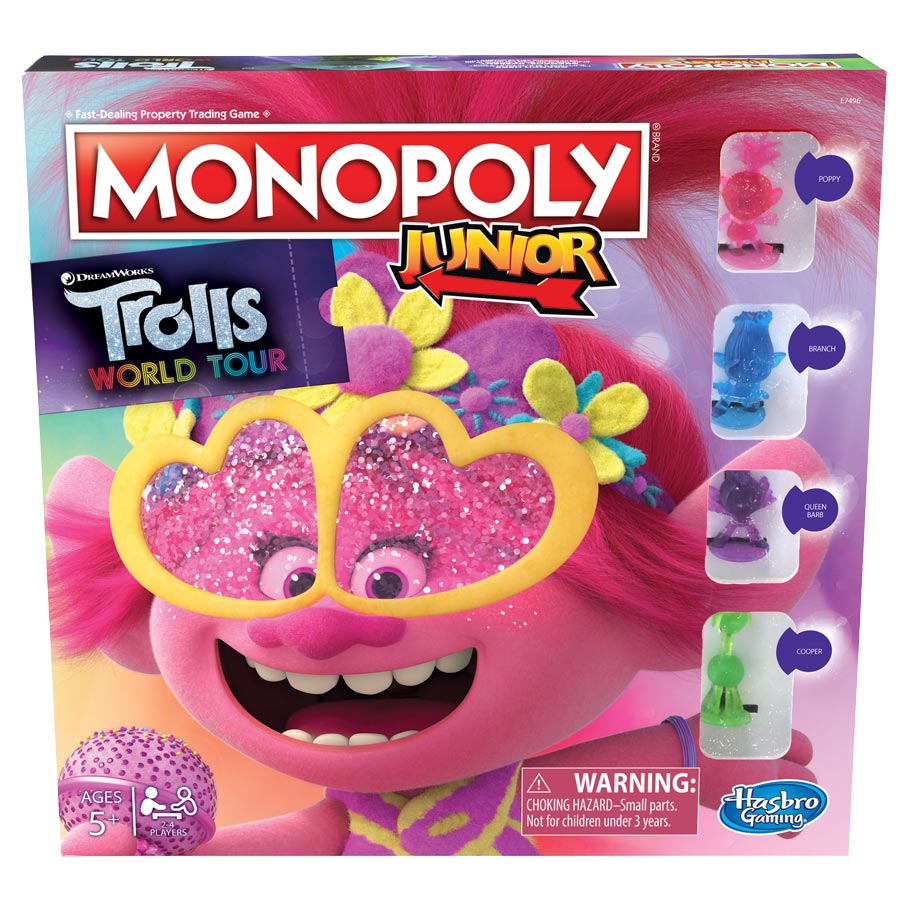
HSBE7496
Monopoly Jr Trolls 2 World Tour

$14.99 SRP
$11.06 NPI

We endeavor to provide accurate information, but this product's name, color, and materials are subject to change without notice.


HSBE6678
Game of Life Junior

$14.99 SRP
$11.85 NPI

We endeavor to provide accurate information, but this product's name, color, and materials are subject to change without notice.

More January Releases from Hasbro
ItemDescriptionSRPNPI
HSBE7610Clue Spring Holiday$4.99$2.90
HSBE9564Clue Ghostbusters$19.99$14.74
HSBE7617Candy Land Spring Holiday$4.99$2.90
HSBE7618Barrel Of Monkeys Spring Holiday$4.99$2.90
HSBE8567Jiggly Jenga$14.99$11.06
HSBE8906Trolls 2: World Tour Trouble$14.99$11.06
HSBE9156Bird Droppings$19.99$15.80
HSBE9348Monopoly Goes Green$19.99$14.74
HSBE9479Monopoly Ghostbusters$29.99$22.12
HSBE9385Star Wars: Hoth Ice Planet Retro Game$24.99$19.75
HSBE9387The Office Guess Who?$14.99$11.06
HSBE9388Minions 2 Operation$19.99$14.74

Friday, December 13, 2019

New January releases from Osprey!

Order by Date: December 20, 2019
Release Date: January 2020

OSPOWG025
Zona Alfa

$20.00 SRP
SDI

Zona Alfa is a set of simple, fast-play skirmish rules for scavenging, exploring, and surviving in a near-future, post-apocalyptic Eastern European setting. Players take on the role of bandits, mercenaries, and military units fighting over the blasted Exclusion Zone and its abandoned artefacts. Customise your fighters with a variety of weapons and specialisms to create your ideal warband. With extended rules for campaigns, character progression, terrain, and environmental hazards, Zona Alfa contains all the tools required to engage in blistering firefights within the Exclusion Zone.

Author: Patrick Todoroff
Illustrator: Sam Lamont


Order by Date: December 20, 2019
Street Date: January 21, 2020
_______________________________________________________

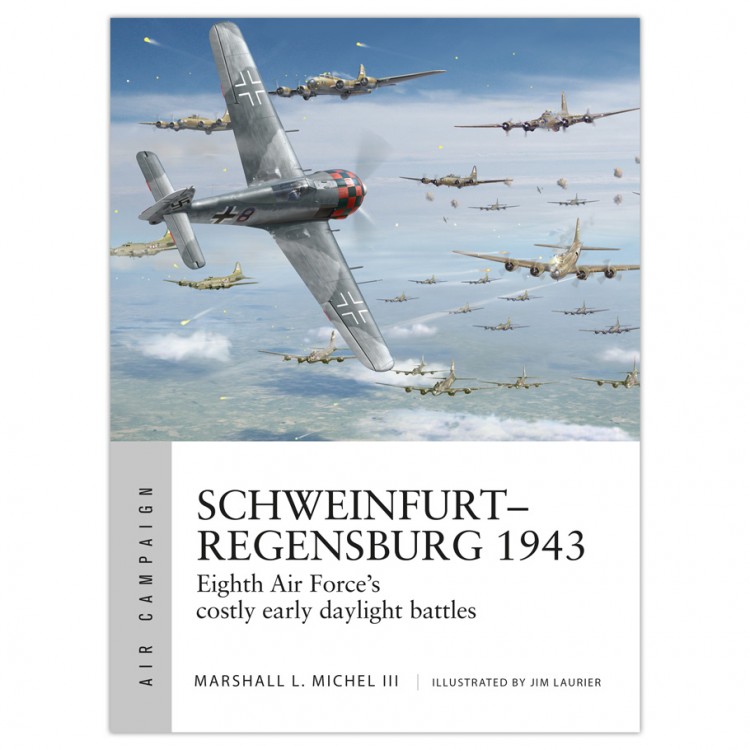
OSPACM014
Schweinfurt–Regensburg 1943

$24.00 SRP
SDI

In 1943, the USAAF and RAF launched the Combined Bomber Offensive, designed to systematically destroy the industries that the German war machine relied on. At the top of the hit list were aircraft factories and plants making ball-bearings - a component thought to be a critical vulnerability. Schweinfurt in southern Germany was home to much of the ball-bearing industry and, together with the Messerschmitt factory in Regensburg, which built Bf 109 fighters, it was targeted in a huge and innovative strike.

Precision required that the targets were hit in daylight, but the raid was beyond the range of any existing escort fighter, so the B-17s would go in unprotected. The solution was to hit the two targets in a coordinated 'double-strike', with the Regensburg strike hitting first, drawing off the defending Luftwaffe fighters, and leaving the way clear for the Schweinfurt bombers. The Regensburg force would carry on over the Alps to North Africa, the first example of US 'shuttle bombing'.

Although the attack on Regensburg was successful, the damage to Schweinfurt only temporarily stalled production, and the Eighth Air Force had suffered heavy losses. It would take a sustained campaign, not just a single raid, to cripple the Schweinfurt works. However, when a follow-up raid was finally launched two months later, the losses sustained were even greater. This title explains how the USAAF launched its daylight bombing campaign in 1943, the technology and tactics available for the Schweinfurt-Regensburg missions, and how these costly failures forced a change of tack.

Author: Marshall Michel III
Illustrator: Jim Laurier
96 page softcover


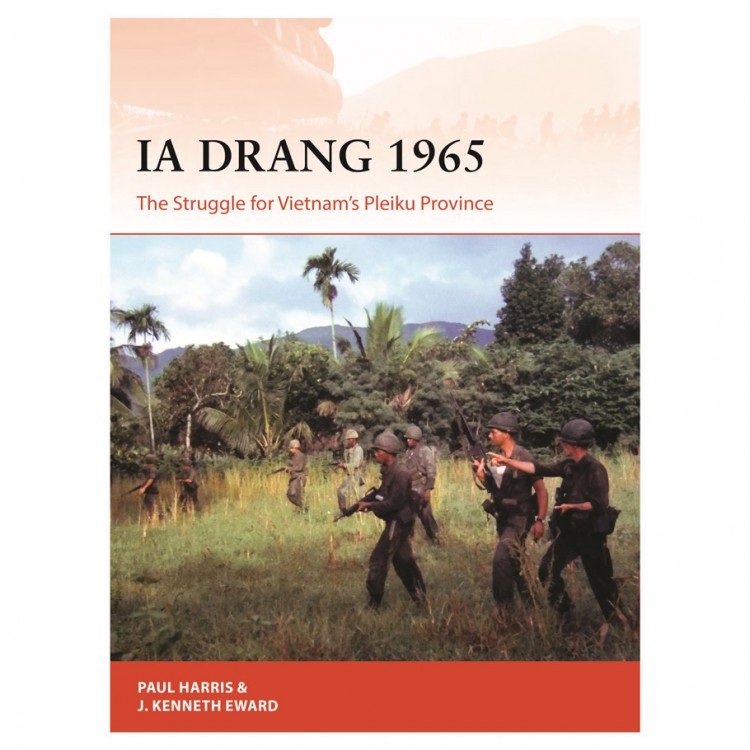
OSPCAM345
Ia Drang 1965

$24.00 SRP
SDI

The Pleiku campaign of October-November 1965 was a major event in the Vietnam War, and it is usually regarded as the first substantial battle between the US Army and the People's Army of Vietnam. The brigade-sized actions involving elements of the US 1st Cavalry Division at Landing Zones X-Ray and Albany in the valley of the river Drang have become iconic episodes in the military history of the United States.

In 1965, in an effort to stem the Communist tide, the Americans began to commit substantial conventional ground forces to the war in Vietnam. Amongst these was the 1st Cavalry Division (Airmobile), a new type of formation equipped with a large fleet of helicopters. On 19 October, North Vietnamese forces besieged a Special Forces camp at Plei Me, and after the base was relieved days later, the commander of the 1st Cavalry Division, General Harry Kinnard, advocated using his troops to pursue the retreating Communist forces. A substantial North Vietnamese concentration was discovered, but rather than the badly battered troops the US expected, these were relatively fresh troops that had recently arrived in the Central Highlands. On the morning of 14 November 1965, 1st Battalion, 7th Cavalry, commanded by Lt. Col. Hal Moore, landed at LZ X-Ray to start the first major set-piece battle of the Vietnam War. This title explores the events of the campaign that followed, using detailed maps, specially-commissioned bird's-eye views, and full-colour battlescenes to bring the narrative to life.

Authors: J. P. Harris and J. Kenneth Eward
Illustrator: Edouard A Groult
Softcover


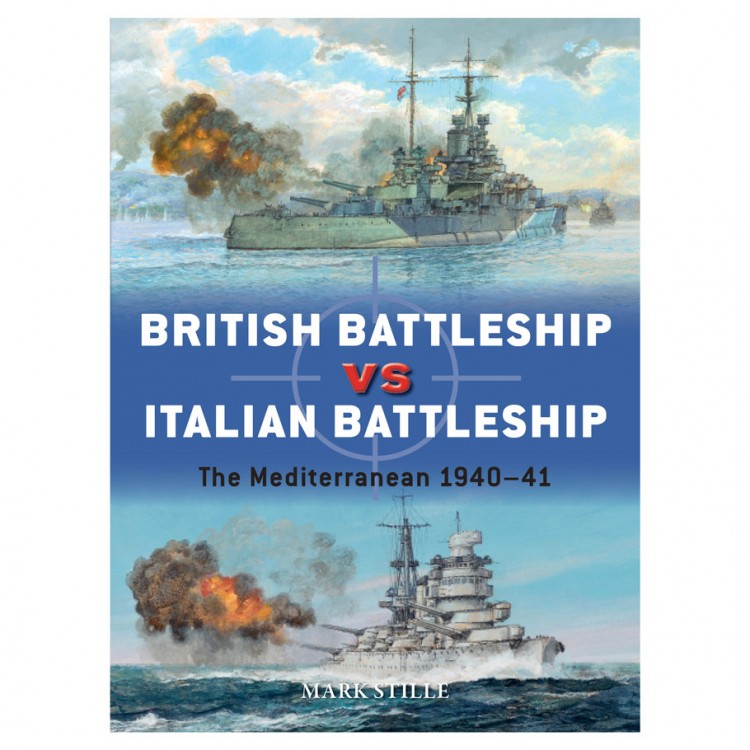
OSPDUE101
British Battleship vs. Italian Battleship

$22.00 SRP
SDI

During World War II's battle for control of the Mediterranean, both the British and Italian navies planned to bring their battle fleets into play. At the centre of both of these fleets was a core of battleships which both sides expected to play a decisive role in the conflict.

On 9 July 1940, the two navies met in the central Mediterranean, as two Italian battleships faced off against three of their British counterparts. Christened the Battle of Calabria, the action allowed the ships to play to their strengths, engaging in a long-range gunnery duel, the very thing they had been designed for. Though both sides shot well, the only hit was scored by Warspite on the Italian battleship Giulio Cesare. The Italians were forced to withdraw, and the action ended up being indecisive, but it was the largest fleet action fought in the Mediterranean during the war. As well as this battle, there were other occasions during the war when both British and Italian battleships were present and influential, but during which they never engaged each other directly - the Battle of Spartivento on 27 November 1940, and the Battle of Cape Matapan on 28-29 March 1941.

Packed with full-colour artwork, carefully selected archive photographs and expert analysis, this title explores in detail the role played by British and Italian battleships in these encounters, and their influence in the Mediterranean theatre of World War II.

Author: Mark Stille
Illustrators: Alan Gilliland and Paul Wright
80 page softcover


OSPELI230
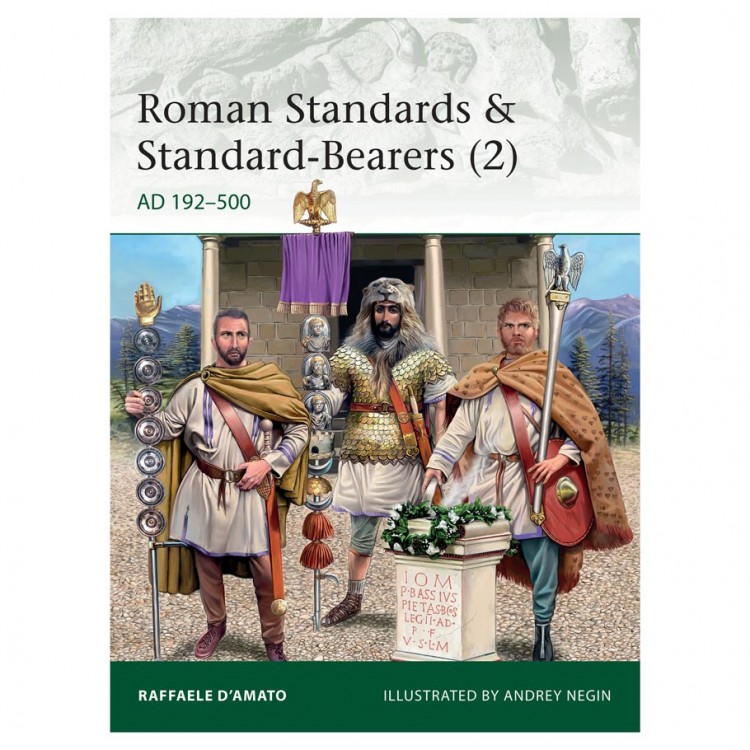
Roman Standards & Standard-Bearers (2)

$20.00 SRP
SDI

The Late Roman Empire was a period of significant change in the designs of standards and in the costumes of standard-bearers. During the middle decades of the chaotic 3rd century, evidence confirms the continued use of the old legionary eagle and the signa of the old cohorts and centuries, alongside flags and Imperial images. The two major trends over the later generations were the adoption of Christian symbols on standards (e.g. Constantine the Great's Chi-Rho), and the proliferation of different types of flags. This had begun in the late 2nd century with the adoption of the 'barbarian' dragon standard, the windsock-shaped draco, which continued to be displayed alongside various other flags in the Greek-speaking Eastern Empire, whose influence increased greatly. Meanwhile, the growing employment of foreign units was such that by the 5th century we have evidence of the use of Hunnic symbolism among a Roman general's suite of standards. The costumes of standard-bearers also evolved as 'Persian' styles spread from Constantinople.

This title explores all these changes in depth, charting the development of various costumes and designs and the waxing and waning influence of various cultures and religious considerations. The text is supported by specially commissioned illustrations and artist's reconstructions of the standards and their bearers.

Author: Raffaele D’Amato
Illustrator: Andrey Evgenevich Negin
Softcover

OSPGNM344
History of the Panzerwaffe: Volume 3: the Panzer Division

$40.00 SRP
SDI
SOO

The first two volumes of the History of the Panzerwaffe have described how the Germans transformed armoured warfare from a lumbering and ponderous experiment in World War I into something that could decide the outcome of conflicts, and how the legendary Panzerwaffe overran Western Europe and reached the gates of Moscow to the east, before taking its place in the forefront of German defence from the D-Day landings to the valiant last stand in Berlin.

This third volume focuses on the most important units in the Panzerwaffe, and some of the most famous units in the history of warfare: the Panzer Divisions. It details their pre-war origins and how they developed over the course of the war, covering all the specialized units and how they operated on the battlefield. The title is illustrated throughout with many rare and previously unpublished images and the text draws heavily on original German documents.

Author: Thomas Anderson

OSPGNM400
British Battle Tanks

$30.00 SRP
SDI

This book, the last in a four-part series on British Battle Tanks covering the whole history of British armoured warfare, concentrates on those vehicles that have served following the end of World War II up to the present day.

Starting with the Centurion, the title explores those types that equipped the armoured divisions lined up on the German plains to resist any potential Soviet offensive, as well as in Korea and Suez, including the Chieftain and Conqueror, and modern tanks such as the Challenger 2 which are still in service today. Covering the many variants of these and other tanks in British service as well as their deployments around the world, including in Afghanistan and Iraq, this illustrated volume is a comprehensive guide to the development of British tanks since the Second World War.

Author: Simon Dunstan
224 page Hardcover


OSPWPN072
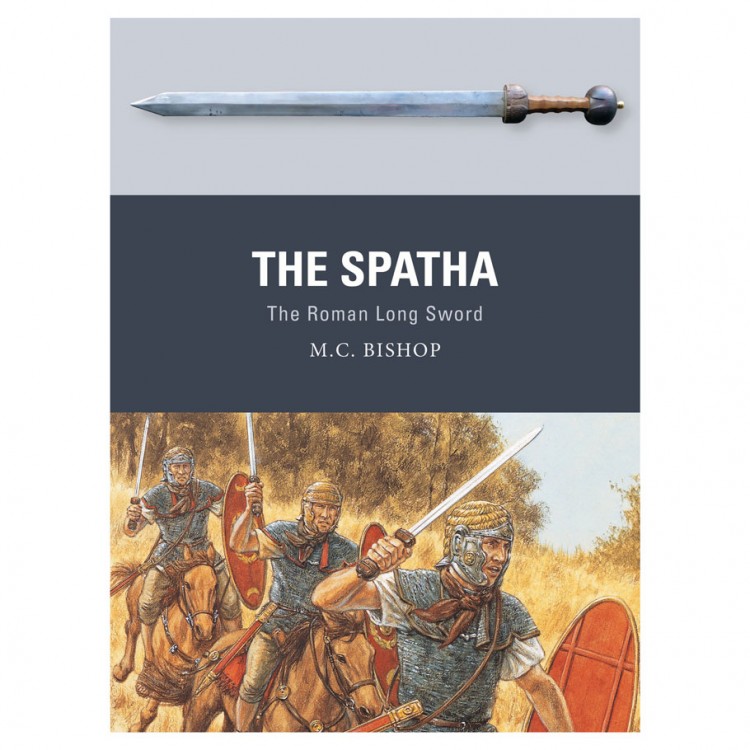
The Spatha

$22.00 SRP
SDI

Adopted from the Celts in the 1st century BC, the spatha, a lethal and formidable chopping blade, became the primary sword of the Roman soldier in the Later Empire. Over the following centuries, the blade, its scabbard, and its system of carriage underwent a series of developments, until by the 3rd century AD it was the universal sidearm of both infantry and cavalry.

Thanks to its long reach, the spatha was the ideal cavalry weapon, replacing the long gladius hispaniensis in the later Republican period. As the manner in which Roman infantrymen fought evolved, styles of hand-to-hand combat changed so much that the gladius was superseded by the longer spatha during the 2nd century AD. Like the gladius, the spatha was technologically advanced, with a carefully controlled use of steel. Easy maintenance was key to its success and the spatha was designed to be easily repaired in the field where access to a forge may have been limited. It remained the main Roman sword into the Late Roman period and its influence survived into the Dark Ages with Byzantine, Carolingian and Viking blades.

Drawing together historical accounts, excavated artefacts and the results of the latest scientific analyses of the blades, renowned authority M.C. Bishop reveals the full history of the development, technology, training and use of the spatha: the sword that defended an empire.

Author: M.C. Bishop
Illustrator: Peter Dennis
Softcover

Wednesday, October 31, 2018

New Releases From WizKids!

Street Date: January 1, 2019

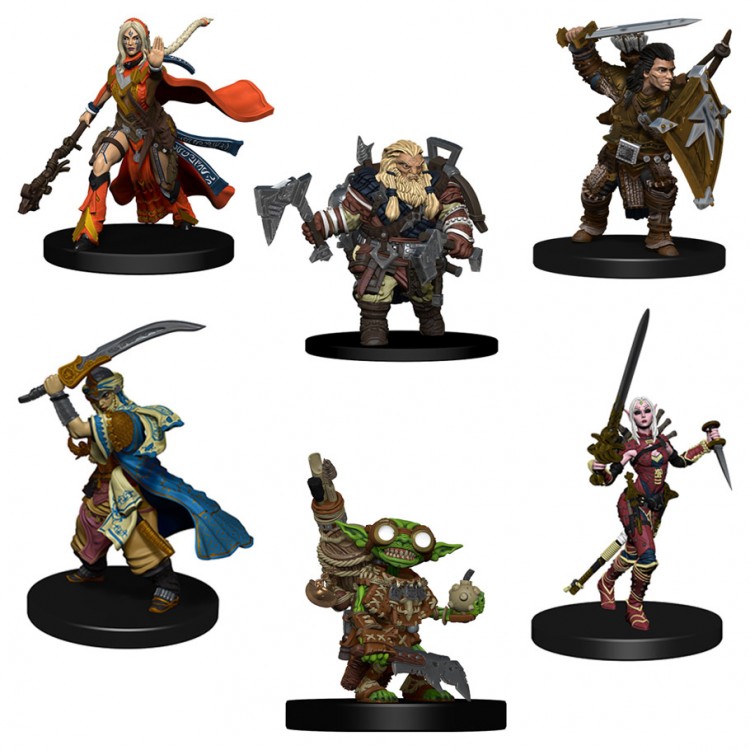
WZK73146 Pathfinder Battles: Playtest Heroes
$34.99 SRP
$18.17 NPI

Pathfinder Battles: Playtest Heroes includes 6 all-new miniatures featuring famous personalities from the Pathfinder Playtest! Valeros, Human Fighter; Harsk, Dwarf Ranger; Seoni, Human Sorcerer; Fumbus, Goblin Alchemist; Mersiel, Elf Rogue; and Kyra, Human Cleric. Each of these miniatures is an all-new sculpt and will feature a dynamic pose, incredible detail, and a premium paint job.

Contents:
Valeros, Human Fighter
Harsk, Dwarf Ranger
Seoni, Human Sorcerer
Fumbus, Goblin Alchemist
Merisiel, Elf Rogue
Kyra, Human Cleric
 
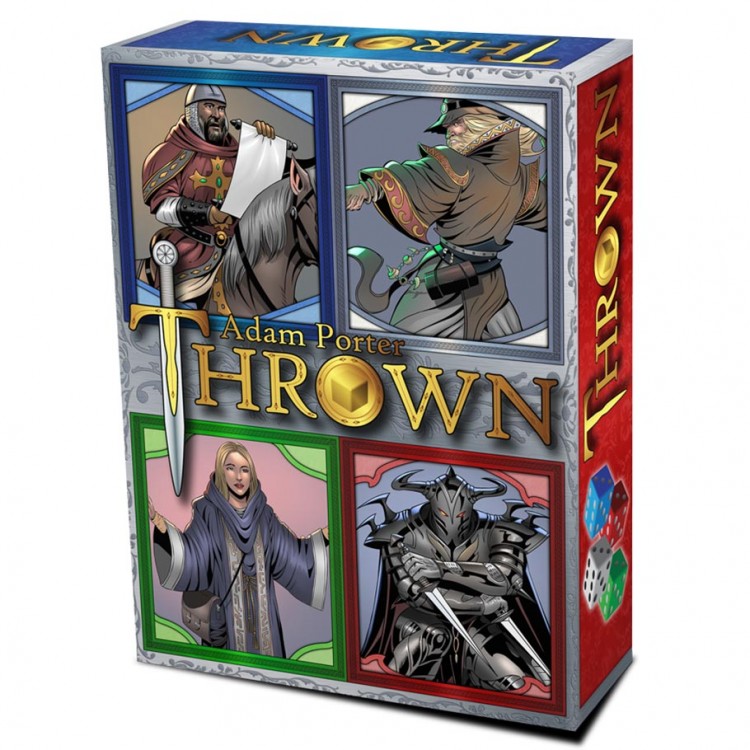
WZK73456 Thrown
$24.99 SRP
$12.98 NPI

Many are familiar with the idea of a trick-taking game: cards are played, with suits mattering, and you are trying to get the highest value on the table. Sometimes there are trumps which override the suits.

In Thrown, the way to play into a trick is by using dice! The colors of the dice represent the suits. The lead player rolls 1-3 dice of a color (the suit) and the other players try to roll in-suit to get the highest value on the table. If you do not have the right suit, then you can roll for trump: rolling a natural 6 on one of your dice in an off-suit will beat the highest value in-suit.

Winning a trick gives you gold. The game ends when there are a number of rounds played equal to the number of players. The winner is the player with the most gold.

But wait, there are cards in the game too! These cards give special abilities which are paid for, or activated with, dice of particular colors. Some of the effects include: flipping your or your opponent’s dice to their opposite sides, removing dice, re-rolling dice, automatically winning with a particular roll, and more!

Contents:
40 Dice
Gold Tokens
26 Cards
4 Cubes
Rules
 
Order by Date: November 13, 2018
Street Date: February 1, 2019
WZK73592
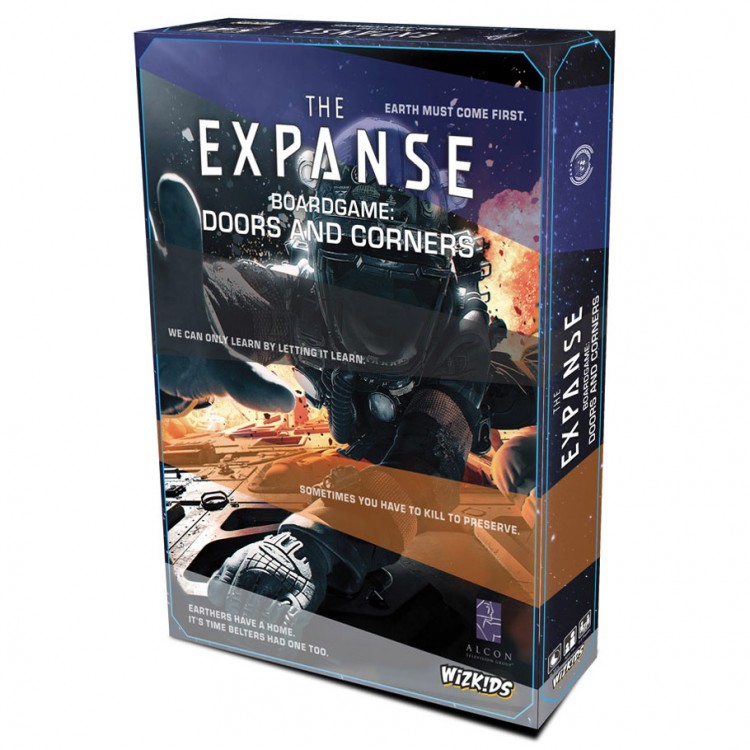
The Expanse: Doors and Corners Expansion
$29.99 SRP
$15.58 NPI

The Expanse: Doors and Corners Expansion contains five (5) new modules that add an engaging element to the strategy and game play as players compete for dominance in the world of The Expanse. On top of that, you can use any number of modules in any combination in conjunction with the base game*! Want to only user the Leaders module? Awesome! Want to combine the New Tech, Resource Tokens, and Protomolecule modules? Even better!

The five modules included in this expansion are: Leaders, New Tech, Resource Tokens, Protomolecule, and Variable Setup. Leaders go with fleets and can add influence when they move with a fleet. New Tech allows variety and surprise in what powers are available. When a tech is earned you have a three random choices for that tech. Resource Tokens can be spent in several ways including helping to pay CP costs, adding AP to a card (max 4), moving up the initiative track, and earning bonus points for having the most at final scoring. Protomolecule adds a new scoring opportunity. Variable Setup allows fleets and influence to be placed anywhere at the start of the game.

Contents:
16 Action Cards
36 Tech Cards
4 Leader Standees
12 Power Play Sector Tokens
12 Power Play Point Tokens
16 Resource Tokens
Suppression Token
Protomolecule Standee
5 Base Destroyed Tokens
Resource Reference Card
Leader Reference Card
Protomolecule Owner Card
Revised Game Board & Ship Tokens